


There are plenty of movie prequels that answer questions nobody was asking. Fortunately, The Hunger Games: Sunrise on the Reaping isn’t one of them. After watching the original Hunger Games films, I thought I had a pretty good understanding of characters like Haymitch Abernathy, Effie Trinket, and President Snow. I knew their personalities, understood their roles, and had formed my opinions about them. What I didn’t fully appreciate was how much their earlier experiences could change my perspective.
That’s what makes Sunrise on the Reaping such an outstanding addition to the franchise. With extraordinary performances, a compelling story, and an ending that delivers, this is easily one of my favorite Hunger Games movies. And considering how much I’ve enjoyed this franchise, that’s saying something.
A Different Perspective on a Familiar World
Set 24 years before Katniss Everdeen volunteers for the Hunger Games, Sunrise on the Reaping takes us back to Panem during the 50th Hunger Games, also known as the Second Quarter Quell. This time, the story follows a young Haymitch Abernathy (Joseph Zada), long before he becomes the cynical, frequently intoxicated mentor we remember from the original films. What’s interesting about this installment is that we already know the world these characters inhabit.


We understand the Capitol’s cruelty, the enormous divide between the districts, and how the Hunger Games have become a grotesque form of entertainment for the privileged. The movie doesn’t need to spend its time explaining every detail of Panem. Instead, it can concentrate on telling its own story within that established world. And that’s exactly what I appreciated. Rather than immediately throwing everyone into the arena, the film allows its narrative to unfold naturally. It gives us an opportunity to understand the circumstances surrounding these characters and what their lives look like before the competition changes everything. That approach creates a stronger foundation for the events that follow.
The Hunger Games have never been simply about who survives. They’re also about the people caught in a system that treats human suffering as entertainment. And this installment does an excellent job reminding us of that.
The Cast Had Some Enormous Shoes to Fill
Let’s be realistic. Playing a younger version of a beloved movie character can be a thankless job. Audiences already have expectations about how that character should look, sound, and behave. Deviate too far, and the performance feels disconnected. Try too hard to imitate the original actor, and you risk delivering something that feels like an impersonation. Thankfully, the cast of Sunrise on the Reaping strikes an impressive balance.
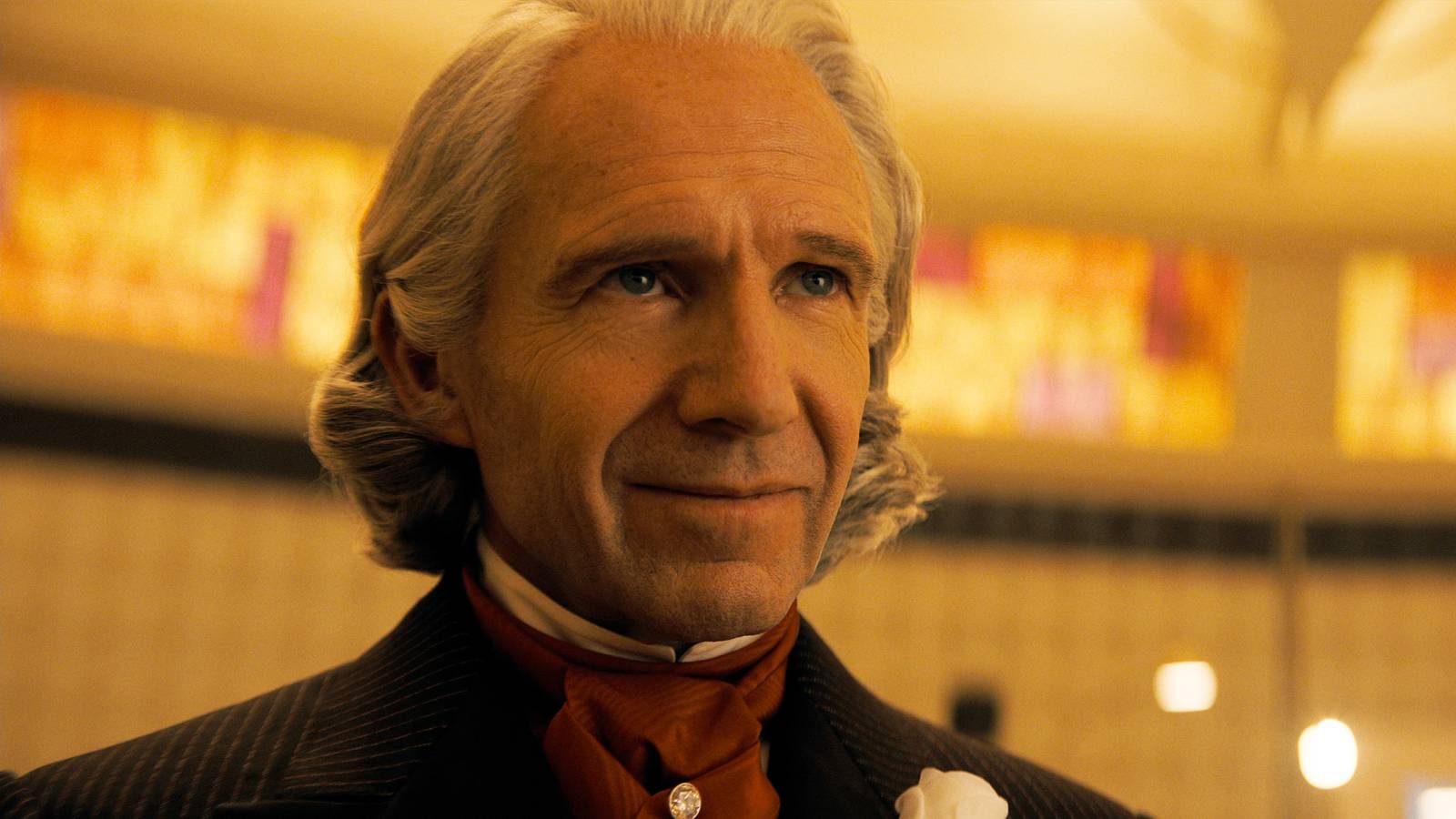
Joseph Zada steps into the role of young Haymitch Abernathy, a character made memorable by Woody Harrelson. Zada manages to establish his own interpretation while maintaining a believable connection to the man audiences eventually meet. Elle Fanning takes on the younger Effie Trinket, previously portrayed by Elizabeth Banks, while Jesse Plemons plays Plutarch Heavensbee. Kieran Culkin portrays Caesar Flickerman, and Ralph Fiennes takes over the role of President Snow. These are recognizable characters associated with some exceptionally talented actors. Yet the younger portrayals work remarkably well.


What impressed me wasn’t simply the casting resemblance or familiar personality traits. It was how convincingly these performers made their characters feel like people who existed long before the original movies. That’s an important distinction. A successful prequel shouldn’t make you feel as though you’re watching actors pretending to be younger versions of someone else. You should believe these are the same people at an earlier stage of their lives. And for me, the cast absolutely delivers.
The Emotional Connection Is What Makes This Film Special
This was easily my favorite aspect of the movie. As the story progresses, you begin making connections between the younger characters and the people they eventually become in the original films. And suddenly, certain behaviors start making a lot more sense. Think about Haymitch. When we first meet him in the original Hunger Games, he’s sarcastic, bitter, frequently drunk, and doesn’t exactly strike you as someone who enjoys being around people. He’s entertaining, certainly, but he’s also a deeply troubled individual. Watching his earlier story provides an entirely different perspective on that personality.
The same idea applies to the broader cast of familiar characters. Their younger lives give additional meaning to relationships and decisions we’ve already witnessed. And that’s where I found myself becoming emotionally invested. It wasn’t necessarily about discovering who would survive or where certain characters would end up. We already know some of those answers. It was about understanding why they became the people we remember. That realization gives the original movies a different emotional dimension. Moments that might have seemed like ordinary character behavior suddenly carry more significance because we now understand the history behind them. It’s almost like meeting someone you’ve known for years and finally hearing the story of everything they’ve experienced. You don’t necessarily see them as a different person afterward. You simply understand them better. That’s what Sunrise on the Reaping accomplished for me, and it’s something I believe longtime fans will particularly appreciate.
A Story That Delivers Where It Matters
Of course, familiarity with the franchise can only take a movie so far. It still needs to tell an entertaining story. Fortunately, Sunrise on the Reaping delivers. Director Francis Lawrence, who has considerable experience bringing Panem to the screen, knows how to balance the spectacle of the Games with the darker realities of the world surrounding them. The film has the tension, political manipulation, and unsettling atmosphere we’ve come to expect from The Hunger Games. But what I enjoyed most was its pacing.


I appreciated that the movie didn’t treat the buildup as something to rush through simply to reach the action. It allows the story to develop before the stakes become increasingly dangerous. That makes the eventual conflict more engaging because the audience has a reason to care beyond the spectacle itself. And importantly, the ending feels satisfying.
Prequels sometimes suffer from being overly concerned with setting up events that happen in later movies. Instead of delivering a meaningful conclusion, they seem content to point audiences toward stories they’ve already seen. I didn’t feel that way here. Sunrise on the Reaping works as a complete story while also strengthening the franchise as a whole. That’s a difficult achievement, particularly when audiences already know where much of the larger narrative is heading. But the film manages to pull it off.


