

I’ve been watching Resident Evil movies for years, and if there’s one thing the franchise has proven, it’s that adapting a video game into a movie isn’t nearly as easy as it sounds. Some adaptations try to recreate the games exactly. Others grab a few familiar names, throw in some zombies, slap Resident Evil on the poster, and hope fans go along for the ride. Zach Cregger’s Resident Evil takes a different approach.

Instead of retelling one of the games, we’re introduced to Bryan (Austin Abrams), a medical courier who has the incredibly bad luck of finding himself trapped in one horrifying night. What starts as another job quickly becomes a fight for survival as everything around him collapses into chaos. And surprisingly, this approach works incredibly well.
The best way I can describe Resident Evil (2026) is that it feels like watching a live-action survival RPG.
Resident Evil Finally Feels Like a Video Game
What immediately stood out to me was how the movie is written and structured. Bryan isn’t an elite soldier who walks into every room already knowing exactly what to do. He’s a relatively normal young guy who suddenly finds himself in a situation that becomes more ridiculous and dangerous by the minute. That’s exactly how a good survival-horror game feels.

You start with very little. You don’t completely understand what’s happening. You explore, pick up information, meet questionable people, encounter increasingly dangerous threats, and try to survive with whatever resources happen to be available. The movie captures that progression without literally copying the mechanics of a video game.
I also loved that Bryan is a young guy who actually references gaming. Those references feel natural rather than like dialogue written by somebody whose entire knowledge of gaming came from watching their nephew play Fortnite once. Because Resident Evil itself comes from gaming, there’s something fun about watching Bryan recognize how absurdly his situation has become. At several points, I found myself mentally giving him instructions.
Don’t go in there. Check the other room first. Why would you walk toward that sound?! And naturally, sometimes he does exactly what you don’t want him to do. This is Resident Evil, after all.

If an inventory screen had suddenly appeared halfway through the movie, I’m not entirely sure I would’ve questioned it.
Austin Abrams Is the Right Kind of Resident Evil Hero
Austin Abrams was a smart choice because Bryan doesn’t look or behave like your stereotypical action hero. If Jason Statham walked into this situation, I’d immediately start feeling sorry for the zombies. Bryan feels vulnerable. You believe he’s scared. You believe he can make mistakes. Most importantly, you believe something could actually kill him. That makes the action and horror considerably more effective. When Bryan manages to survive something, there’s almost that same little feeling of accomplishment you get after finally making it through a difficult section of a game.

The movie also understands the difference between horror and survival horror. It’s not simply about monsters jumping out of dark rooms. It’s the uncertainty of what’s around the next corner, not knowing whom to trust, and constantly feeling like one bad decision could end everything. And yes, the movie actually got me a couple times. Not the little “Oh, that was loud” reaction either. There were a few legitimate jump scares that caught me completely off guard. I watch enough horror movies that I can usually see those things coming, so when one actually gets me, I’ll happily give the movie credit.
Zach Cregger Knows How to Build Suspense
Zach Cregger’s style fits Resident Evil extremely well because he understands that what you’re expecting to happen can sometimes be more frightening than what actually happens. He lets scenes sit just long enough for your imagination to start causing problems. A dark hallway doesn’t immediately need a monster. Sometimes you just need to stare down that hallway long enough to become convinced there’s a monster. Then the movie can decide whether you’re right.

There’s also humor throughout the film, but thankfully it doesn’t turn everything into a joke. The lighter moments give you enough room to relax before the movie starts tightening the screws again. That’s a difficult balance with horror. If everybody is constantly cracking jokes, eventually you stop worrying about them. Cregger’s Resident Evil mostly avoids that problem.
My Wife Liked It Even More Than I Did
Here’s something I wasn’t expecting:
My wife enjoyed the movie more than I did. And I really liked it. That actually made me think about how differently longtime Resident Evil fans might approach this film.
Fans walk in carrying decades of expectations. We’re comparing the atmosphere to the games, thinking about previous movies, looking for references, and deciding whether something feels sufficiently Resident Evil. Someone without all that baggage can simply watch Bryan have the worst night imaginable. And the movie works perfectly well that way.
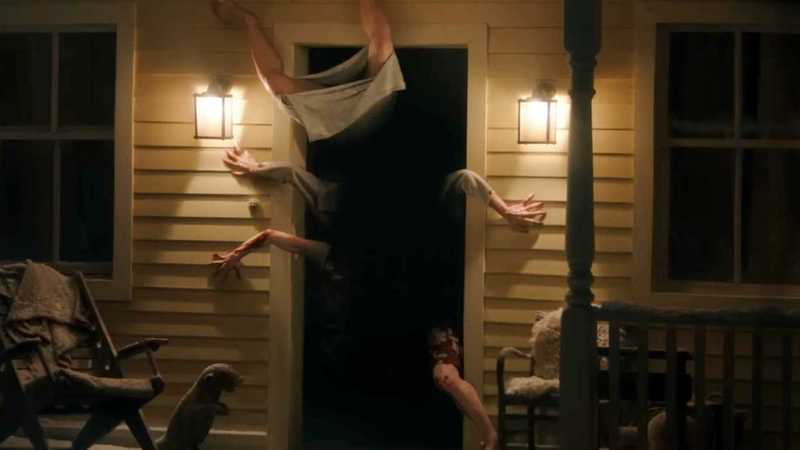
You don’t need to know every Umbrella experiment or have completed a bunch of games before buying a ticket. The film establishes its own protagonist and gives you everything you need to follow his story. That accessibility might actually be one of its biggest strengths.
The Supporting Cast Adds Just Enough Weirdness
Zach Cherry, Kali Reis, and Paul Walter Hauser round out the main cast, and each brings something different to Bryan’s increasingly bizarre night. Paul Walter Hauser, in particular, feels right at home in this world. He’s one of those actors who can make you laugh while simultaneously making you question whether trusting his character is an absolutely terrible idea. That’s exactly the kind of energy Resident Evil needs.
Thankfully, the supporting characters don’t overwhelm the story either. Bryan remains our way into this world, so the movie never starts feeling like an overcrowded ensemble where we’re bouncing between twelve different storylines.
An Original Story Was the Right Decision
Another thing I appreciated is that this isn’t trying to recreate the Milla Jovovich movies, nor does it simply repeat Welcome to Raccoon City. Instead, Cregger takes the atmosphere and survival mechanics associated with Resident Evil and uses them to tell a new story. I think that’s the smarter approach.

We’ve already seen filmmakers attempt to directly translate familiar characters and storylines. An original protagonist allows the movie to surprise existing fans while still being approachable for somebody who has never touched a Resident Evil game. It also makes the universe feel bigger. Not every story in this world needs to revolve around the same handful of characters.
Sometimes I want to know what happens to the poor random guy who was just trying to finish his shift when everything went to hell. Apparently, the answer is Resident Evil (2026).