

Going into The Housemaid, I honestly wasn’t sure what to expect. I hadn’t read the book by Freida McFadden, and aside from knowing it was being adapted into a psychological thriller directed by Paul Feig, I walked in pretty blind. Sometimes that’s the best way to experience a film like this—no expectations, no comparisons, just letting the story unfold.

That said, The Housemaid is a movie that asks for patience. A lot of it. This is a very slow-burn psychological thriller that takes its time setting the table before finally serving the meal. Whether that patience pays off for you will depend entirely on how much you enjoy tension that simmers rather than explodes.
Plot Overview: Beneath the Surface of a “Perfect” Home
At its core, The Housemaid revolves around power dynamics, secrets, and the uneasy feeling that something is off—even if you can’t quite put your finger on it yet. The story follows a housemaid who becomes entangled in the lives of a wealthy family, slowly uncovering layers of manipulation, control, and hidden agendas.

If you’ve seen films in this genre before, you’ll recognize the setup: pristine house, smiling faces, uncomfortable silences, and that nagging sense that not everything is as it seems. And honestly, that familiarity works both for and against the film.
Choppy Transitions That Break the Flow
One of the biggest hurdles The Housemaid faces is its pacing and editing. Several scenes feel choppy in their transitions, almost like pieces were stitched together without enough breathing room. There were moments where I leaned forward in my seat, thinking a scene was about to escalate… only for it to cut away abruptly.
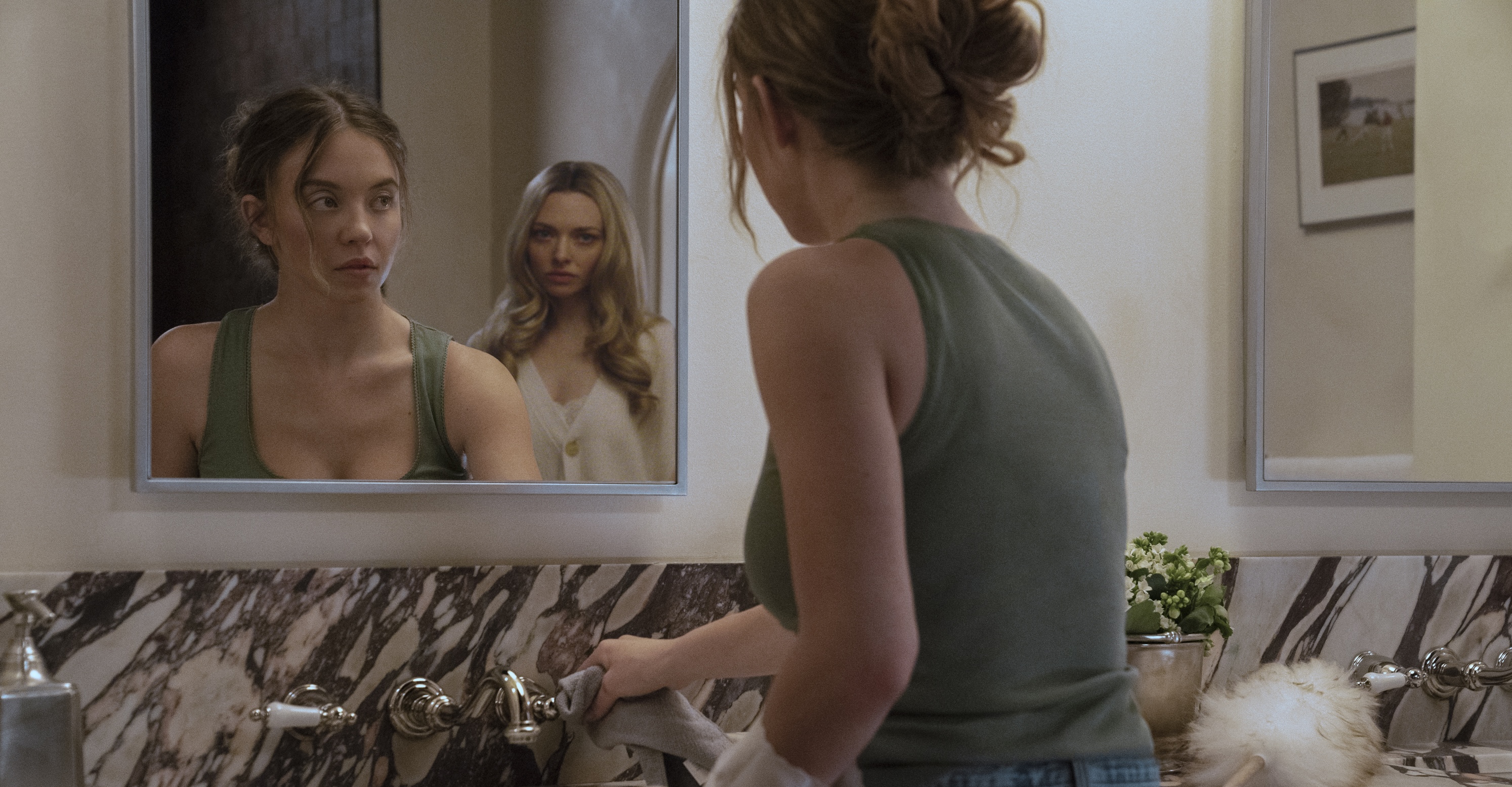
Since I haven’t read the book, it’s hard to say whether this pacing mirrors the source material or if something was lost in adaptation. But as a viewer, those transitions occasionally pulled me out of the story instead of drawing me deeper in.
Slow Burn… Almost Too Slow
Like previously stated, this is absolutely a slow burn type of film, and I don’t say that lightly. The first two acts move cautiously, focusing on mood, character behavior, and subtle tension rather than plot progression. For some viewers, that will be a feature—not a flaw.
For others (and I’ll include myself here), it borders on testing your patience.

I remember checking the time about halfway through—not because I was bored exactly, but because I kept waiting for the story to tip. That moment doesn’t really arrive until much later, which is a huge risk in today’s attention economy. Not everyone is going to stick it out long enough to see where it’s all going.
Strong Acting Saves the Experience
If there’s one reason The Housemaid remains watchable throughout its slower moments, it’s the cast.
- Sydney Sweeney delivers a layered performance that balances vulnerability with quiet intensity. She’s very good at conveying internal conflict without saying much, which is essential in a film like this.
- Amanda Seyfried brings a controlled, unsettling presence that makes every interaction feel slightly dangerous—even when nothing overtly threatening is happening.
- Brandon Sklenar and Michele Morrone add complexity to the household dynamics, each feeling like they could tip into antagonist territory at any moment.
- Elizabeth Perkins rounds out the cast with a grounded performance that adds credibility to the emotional stakes.

Honestly, the cast is what kept me engaged during stretches where not much happens. Their performances make you question motivations, reread facial expressions, and second-guess your assumptions—exactly what a psychological thriller should do.
A Risky But Effective Payoff
I’ll be honest—The Housemaid didn’t fully win me over until the final act.
But when it does get good, it gets good.
The tension tightens, motivations become clearer, and the story finally delivers on the unease it’s been hinting at all along. There’s a real sense of release once the pieces fall into place, and I found myself thinking, Okay… now I see what they were going for.

That said, this approach is risky. Not every viewer will be willing to wait that long, and I could easily see some people walking away before the payoff arrives. For those who stick it out, though, the ending recontextualizes much of what came before it.
Final Thoughts: Worth Watching—If You’re Patient
The Housemaid is one of those movies that I’m glad I watched, but I’m not sure I’d rush to watch again.
It’s not a fast-paced thriller. It’s not twist-heavy from the start. And it definitely isn’t a crowd-pleaser designed for instant gratification. What it is—is a moody, character-driven psychological drama that rewards patience and attention.

If you enjoy slow-burn thrillers and strong performances, there’s a lot here to appreciate. If you need constant momentum or immediate payoff, this may test your limits.
Personally, I think the cast made the film watchable, and the ending justifies the journey—even if that journey could have been tighter.
[penci_review id=”10787″]